
Those who love architecture know that staircases are so much more than just functional connectors between floors—they’re natural focal points in a home, like a centerpiece. A well-chosen stair railing can elevate an otherwise ordinary set of steps into a statement feature, marrying safety with design. Whether you lean traditional, modern, or eclectic, the right railing design can reinforce your home’s character while meeting practical needs.
Classic Wood Railings
Wood railings remain a timeless choice. From traditional turned spindles and sweeping oak banisters to simple square balusters, wood adapts to nearly any interior style. Its warmth and versatility mirror the enduring appeal of classic hardwood flooring.
In more traditional homes, you might see richly stained banisters paired with white-painted balusters, offering a look that feels both familiar and inviting. These combinations work particularly well in homes with dark-toned floors, where the deep wood of the railing echoes the floor beneath it.
Painted Finishes and Contrasts
For a fresher approach, many homeowners paint their stair railings. Crisp white balusters with a contrasting black or espresso handrail create a clean, striking effect. This combination pairs beautifully with modern interiors that favor sharp lines and bold accents.
If you’re deciding between finishes, think of the railing as an extension of your flooring palette. Just as floor color psychology affects the mood of a space, the tones of your railing can make a staircase feel bright and airy or bold and grounded.
Metal and Industrial Flair
Metal railings bring a sense of strength and modernity to a staircase. Iron balusters with decorative twists and baskets nod to classic design, while clean-lined steel or cable railings create a sleek, contemporary look. These options are particularly popular in lofts or open-plan homes, where they complement exposed beams, concrete, or minimalist interiors.
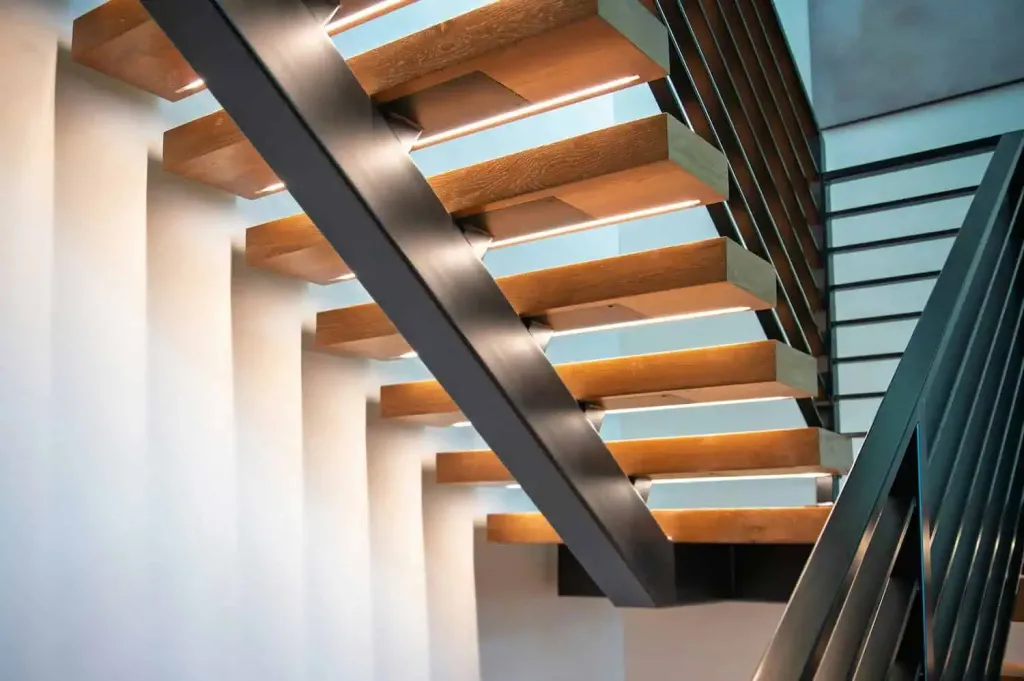
Pairing metal with wood handrails can soften the look, much like combining hardwood flooring with rustic furniture brings balance to a room. This contrast allows homeowners to enjoy the durability of one material while preserving the warmth of another.
Glass Railings for Light and Openness
For those drawn to modern or transitional design, glass railings are an increasingly popular choice. Clear or frosted panels allow natural light to flow freely, keeping stairwells bright and open. This design trick can make smaller or darker interiors feel significantly larger, echoing how lighter floor colors create the illusion of more space.
Glass railings aren’t just about looks—they’re also surprisingly safe and durable when installed properly. Tempered glass panels can handle everyday wear while still looking elegant.
Mixed Materials and Creative Combos
One of the most exciting trends in stair railing design is mixing materials. Think oak handrails paired with sleek black iron balusters, or stainless steel combined with walnut posts. This approach adds depth and character.
Cable railing is another innovative option, offering a modern look that feels open yet secure. It’s a great way to keep sightlines clear in open-concept spaces while still meeting safety standards.
Details That Make a Difference
Small touches can have an outsized impact on how a stair railing feels. Post caps, for example, can range from simple flat tops to ornate carved designs. The profile of the handrail itself—rounded, squared, or molded—also changes the overall impression. Even the hardware used to secure balusters or glass panels can lean industrial, modern, or traditional, depending on the look you’re going for.
These details mirror the small decisions you’d make with flooring transitions or trim. At the end of the day, it’s important to remember that the details in your railing can elevate the entire staircase.
Practical Considerations
Of course, design isn’t the only factor. Safety and maintenance should guide your choices, too. Wooden railings require periodic refinishing to stay in top shape, while metal may need occasional repainting to prevent rust. Glass railings need frequent cleaning but are otherwise durable.
Environmental factors also matter. Homes with higher humidity should take note: just as wood floors can buckle in damp conditions, railings made from untreated wood may warp over time. Choosing the right material upfront can prevent future frustrations.
An interior stair railing is never just a code requirement—it’s an opportunity to enhance your home’s design. From classic wood and crisp painted finishes to sleek metal, airy glass, and creative mixed-material combinations, there are endless ways to make a staircase both safe and stunning.
Your railing should complement your flooring, walls, and overall aesthetic while remaining sturdy and practical. When chosen thoughtfully, it can transform a staircase from a purely functional feature into one of the most memorable design elements in your home. Head over to the First Atlanta Flooring shop to get all the tools and materials you need for your next stair-related job.

